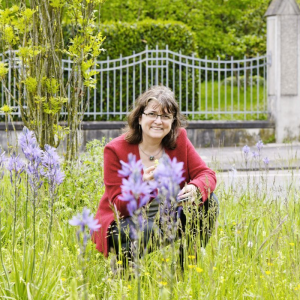
Martina Roß-Nickoll
Prof. Dr.
Publikationen
Publikationen
- Honert, C., Sybertz, A., Jäger, U., Roß-Nickoll, M. & Brühl, C. A. (2026): Field measurements of pesticide drift and dissipation and regulatory exposure assumptions. Environmental Sciences Europe 38: 141. doi.org/10.1186/s12302-026-01478-6
- Bach A., Roß-Nickoll M., Bruelheide H., Bonn A., Hohner M., Muster C., Seifert S., Raub F. & H. Höfer (2026): Natural history societies as stewards of biodiversity data: Lessons from arachnology for improving quality, access and trust. Ecological Informatics 96: 103694. doi.org/10.1016/j.ecoinf.2026.103694
- Zhao Q., Lan Y., Shao Y., Zhang X., Feng Y., Ammar E. E., Roß-Nickoll M., Kaplin B. A., Feng L. & Z. Chen (2026): Plant–arthropod–soil interactions in reservoir water-level fluctuation zones: A novel driver of soil phosphorus cycling. Agriculture, Ecosystems & Environment 404: 110361. doi.org/10.1016/j.agee.2026.110361
- Miller A., Schröder K. L., Braun K. E., Steindorf C., Ottermanns R., Roß-Nickoll M., Hollert H. & T. Backhaus (2025): Temperature-dependence of early development of zebrafish and the consequences for laboratory use and animal welfare. PLOS ONE 20(12): 1-16. doi.org/10.1371/journal.pone.0340193
- Wolf C., Wenzel M., Fischer B., Bertling R., Jelen E., Hennecke D., Weinfurtner K., Roß-Nickoll M., Hollert H., Weltmeyer A., Bitter K., Ruiz P., Banduka D., Tuerk J. & L. M. Blank (2025): iMulch: an investigation of the influence of polymers on a terrestrial ecosystem using the example of mulch films used in agriculture. Environmental Sciences Europe 37. doi.org/10.1186/s12302-024-01050-0
- Miller A., Schröder K. L., Braun K. E., Steindorf C., Ottermanns R., Roß-Nickoll M. & T. Backhaus (2025): Dataset on temperature dependency of zebrafish early development. Scientific Data 12. doi.org/10.1038/s41597-025-04731-4
- Byun J.-G., Ottermanns R. & M. Roß-Nickoll (2025): Sustaining European Beech Forests: Multi-criteria Evaluation of Management Regimes in the Eifel Region Using Long-Term Simulation. Korean Journal of Environment and Ecology 39(5): 497–507. doi.org/10.13047/KJEE.2025.39.5.497
- Stratemann L., Schröer L., Bach A., Toschki A., Oellers J. & M. Roß-Nickoll (2025): BioDivSoil – Bodenbiodiversität im Fokus: Diversitätsmuster und Methodenevaluation zur Erfassung und Bewertung der Bodenbiodiversität in der Agrarlandschaft. Deutschland / Bundesamt für Naturschutz, BfN-Schriften 746. doi.org/10.19217/skr746
- Zhang Y., Yang Y., Shao Y., Wang J., Chen Z., Roß-Nickoll M. & A. Schäffer (2025): Conversion of Rice Field Ecosystems from Conventional to Ecological Farming: Effects on Pesticide Fate, Ecotoxicity and Soil Properties. Environmental Management 75(4): 930–944. doi.org/10.1007/s00267-024-02064-3
- Bach A., Jedamski J., Daniels B. & M. Roß-Nickoll (2025): From lawns to meadows: spiders (Arachnida: Araneae) as indicators to measure urban grassland restoration success. Urban Ecosystems 28(41). doi.org/10.1007/s11252-024-01626-x
- Bialozyt R. B., Roß-Nickoll M., Ottermanns R. & J. Jetzkowitz (2025): The different ways to operationalise the social in applied models and simulations of sustainability science: A contribution for the enhancement of good modelling practices. Ecological Modelling 500: 110952. doi.org/10.1016/j.ecolmodel.2024.110952
- Sybertz A., Ottermanns R. & M. Roß-Nickoll (2025): MIXCOP–Implementation of a model to assess the time-dependent effects of mixed pesticides on a collembolan population. MethodsX 14: 103403. doi.org/10.1016/j.mex.2025.103403
- Seidel A., Heimbach I., Seiler T.-B., Hollert H., Blank L. M. & M. Roß-Nickoll (2025): Sorption to mulch film decreases bioavailability of two model pesticides for earthworms in soil. Ecotoxicology and Environmental Safety 306: 119345. doi.org/10.1016/j.ecoenv.2025.119345
- Molls C., Thomaes A., Dierickx G., Durlet A., Goessens S., Goffart B., Fiévet V., Roß-Nickoll M. & A. Verbeken (2025): Oviposition and larval mycelia preference of the saproxylic European stag beetle. Ecological Entomology 50(4): 753-762. doi.org/10.1111/een.13443
- Feng Y., Zhu Z., Shao Y., Roß-Nickoll M. & Z. Chen (2025): Riparian Vegetation Adapts to the Antiseasonal Water Fluctuations: Insights From Plant Functional Traits. Ecohydrology 18(3): e70034. doi.org/10.1002/eco.70034
- Lan Y., Li T., Yang Y., Zhou M., Zhang X., Feng Q., Xu J., Shao Y., Roß-Nickoll M. & Z. Chen (2025): Revegetation potential assessment on the Hanfeng Lake of the Three Gorges Reservoir: Evidence from soil seed bank. Ecohydrology & Hydrobiology 25(2): 377-388. doi.org/10.1016/j.ecohyd.2024.05.006
- Siedt M., Roß-Nickoll M., Schäffer A. & J. T. van Dongen (2024): Shift of bacterial and fungal communities upon soil amelioration is driven by carbon degradability of organic amendments. Discover Soil 1. doi.org/10.1007/s44378-024-00012-5
- Solé M., Brendel S., Aldrich A., Dauber J., Ewald J., Duquesne S., Gottschalk E., Hoffmann J., Kuemmerlen M., Leake A., Matezki S., Meyer S., Nabel M., Natal-da-Luz T., Pieper S., Piselli D., Rigal S., Roß-Nickoll M., Schäffer A., Settele J., Sigmund G., Sotherton N., Wogram J. & D. Messner (2024): Assessing in-field pesticide effects under European regulation and its implications for biodiversity: a workshop report. Environmental Sciences Europe 36. doi.org/10.1186/s12302-024-00977-8
- Schröer L., Bach A., Oellers J., Nabel M., Kirse A., Stratemann L., Toschki A. & M. Roß-Nickoll (2024): Hürden und Chancen der Integration DNA-basierter Methoden für ein Bodenbiodiversitätsmonitoring in Agrarlebensräumen. Natur und Landschaft 99(09/10): 470–479. doi.org/10.19217/NuL2024-09-06
- Ballasus H., Beylich A., Bluhm C., Buscot F., Cordsen E., Eisenhauer N., Fröhlich J., Glante F., Grüneberg E., Hommel B., Höper H., Jacob F., Lachmann C., Nabel M., Pieper S., Puhlmann H., Römbke J., Roß-Nickoll M., Russell D. J., Scheu S., Tebbe C. C., Toschki A., Walter R. & L. Weiß (2024): Wege zu einem bundesweit harmonisierten Monitoring: Verbesserung der Erfassung der Bodenbiodiversität und ihrer Funktionen. Natur und Landschaft 99(9/10): 452-458. doi.org/10.19217/NuL2024-09-04
- Weltmeyer A. & M. Roß-Nickoll (2024): Different mulch films, consistent results: soil fauna responses to microplastic. Environmental Monitoring and Assessment 196. doi.org/10.1007/s10661-024-13096-x
- Byun J.-G., Roß-Nickoll M. & R. Ottermanns (2024): Development of simulation for estimating growth changes of locally managed European beech forests in the Eifel Region of Germany. Journal of the Korea Society for Simulation 33(1): 1–17. doi.org/10.9709/JKSS.2024.33.1.001
- Bach A., Raub F., Höfer H., Ottermanns R. & M. Roß-Nickoll (2024): ARAapp: filling gaps in the ecological knowledge of spiders using an automated and dynamic approach to analyze systematically collected community data. Database 2024: baae004. doi.org/10.1093/database/baae004
- Russell D. J., Naudts E., Soudzilovskaia N. A., Briones M. J. I., Çakır M., Conti E., Cortet J., Fiera C., Kutuzovic D. H., Hedde M., Hohberg K., Indjic D., Krogh P. H., Lehmitz R., Lesch S., Marjanovic Z., Mulder C., Mumladze L., Murvanidze M., Rick S., Roß-Nickoll M., Schlaghamerský J., Schmidt O., Shelef O., Suhadolc M., Tsiafouli M., Winding A., Zaytsev A. & A. Potapov (2024): Edaphobase 2.0: Advanced international data warehouse for collating and using soil biodiversity datasets. Applied Soil Ecology 204: 105710. doi.org/10.1016/j.apsoil.2024.105710
- Daniel J., Alvarez A. A. S., Heesen P., Lehrheuer B., Pischinger S., Hollert H., Roß-Nickoll M. & M. Du (2024): Air-liquid interface exposure of A549 human lung cells to characterize the hazard potential of a gaseous bio-hybrid fuel blend. PLOS ONE 19(6): 1-20. doi.org/10.1371/journal.pone.0300772
- Leuchner M., Hinrichs F., Roß-Nickoll M. & P. Letmathe (2024): Ecosystem Services as a Framework for Transformation of the Rhenish Mining Area. In: Transformation Towards Sustainability: 233–270. Springer International Publishing. doi.org/10.1007/978-3-031-54700-3_9
- Bach A., Roß-Nickoll M., Holstein J., Ottermanns R., Raub F., Triebel D., Weiss M., Wendt I. & H. Höfer (2023): Improved access to arachnological data for ecological research through the ARAMOB data repository, supported by Diversity Workbench and NFDI data pipelines. Arachnologische Mitteilungen: Arachnology Letters 66(1): 79–85. doi.org/10.30963/aramit6609
- Siedt M., Vonhoegen D., Smith K. E. C., Roß-Nickoll M., van Dongen J. T. & A. Schäffer (2023): Fermented biochar has a markedly different effect on fate of pesticides in soil than compost, straw, and a mixed biochar-product. Chemosphere 344: 140298. doi.org/10.1016/j.chemosphere.2023.140298
- Gerwin W., Raab T., Birkhofer K., Hinz C., Letmathe P., Leuchner M., Roß-Nickoll M., Rüde T., Trachte K., Wätzold F. & F. Lehmkuhl (2023): Perspectives of lignite post-mining landscapes under changing environmental conditions: what can we learn from a comparison between the Rhenish and Lusatian region in Germany?. Environmental Sciences Europe 35. doi.org/10.1186/s12302-023-00738-z
- Breidenbach L. R., Benner L., Roß-Nickoll M., Linnemann V. & A. Schäffer (2023): Monitoring metal patterns from urban and agrarian sites using the bumblebee Bombus terrestris as a bioindicator. Environmental Science and Pollution Research 30: 119947–119960. doi.org/10.1007/s11356-023-30504-w
- Siedt M., Nabel M., Roß-Nickoll M., Schäffer A., Smith K. E. C. & J. T. van Dongen (2023): Auswirkungen von organischen Bodenzusätzen auf biodiversitätsgefährdende Stoffströme in der Landwirtschaft. Deutschland / Bundesamt für Naturschutz, BfN-Schriften 660, 80 S.. doi.org/10.19217/skr660
- Roeben V., Montoya-Tzschoppe L. & M. Roß-Nickoll (2023): Long life at low temperatures – The life-history of Folsomia candida at ecological relevant temperatures. Pedobiologia 96: 150847. doi.org/10.1016/j.pedobi.2022.150847
- Benner L., Coder L., Reiter A., Roß-Nickoll M. & A. Schäffer (2023): Bumblebees under pollution pressure of pesticides in urban and agrarian landscapes. Journal of Hazardous Materials Advances 9. doi.org/10.1016/j.hazadv.2022.100216
- Rumohr Q., Grimm V., Lennartz G., Schäffer A., Toschki A., Roß-Nickoll M. & S. Hudjetz (2023): LandS: Vegetation modeling based on Ellenberg's ecological indicator values. MethodsX 11: 102486. doi.org/10.1016/j.mex.2023.102486
- Zhang X., Zhang L., Wang Y., Shao Y., Daniels B., Roß-Nickoll M. & Z. Chen (2022): Pollinators and urban riparian vegetation: important contributors to urban diversity conservation. Environmental Sciences Europe 34. doi.org/10.1186/s12302-022-00661-9
- Linzenich A., Engelmann L., Arning K., Du M., Heger S., Roß-Nickoll M. & M. Ziefle (2022): Harmful or Beneficial to Humans and the Environment? An Empirical Study on the Social Acceptance and Risk Perception of CO2-Based Fuels. Frontiers in Environmental Science 10. doi.org/10.3389/fenvs.2022.737070
- Johann S., Weichert F. G., Schröer L., Stratemann L., Kämpfer C., Seiler T.-B., Heger S., Töpel A., Sassmann T., Pich A., Jakob F., Schwaneberg U., Stoffels P., Philipp M., Terfrüchte M., Loeschcke A., Schipper K., Feldbrügge M., Ihling N., Büchs J., Bator I., Tiso T., Blank L. M., Roß-Nickoll M. & H. Hollert (2022): A plea for the integration of Green Toxicology in sustainable bioeconomy strategies – Biosurfactants and microgel-based pesticide release systems as examples. Journal of Hazardous Materials 426. doi.org/10.1016/j.jhazmat.2021.127800
- Li T., Zhu Z., Shao Y., Chen Z. & M. Roß-Nickoll (2022): Soil seedbank: Importance for revegetation in the water level fluctuation zone of the reservoir area. Science of The Total Environment 829: 154686. doi.org/10.1016/j.scitotenv.2022.154686
- Toschki A., Oellers J., Rumohr Q., Roß-Nickoll M., Daniels B., Schäffer A. & A. Sybertz (2021): Integriertes Monitoring in der Agrarlandschaft. Umweltbundesamt 136/2021. Link zur Publikation
- Heine P., Hausen J., Ottermanns R. & M. Roß-Nickoll (2021): Comparing eDNA metabarcoding with morphological analyses: Fungal species richness and community composition of differently managed stages along a forest conversion of Norway spruce towards European beech in Germany. Forest Ecology and Management 496: 119429. doi.org/10.1016/j.foreco.2021.119429
- Knillmann S., Liess M., Scholz-Starke B., Daniels B., Ottermanns R., Schäffer A., Sybertz A. & M. Roß-Nickoll (2021): Environmental risks of pesticides between forecast and reality: How reliable are results of the environmental risk assessment for individual products in the light of agricultural practice (tank mixtures, spray series)?. Umweltbundesamt 82/2021, 196 S.. Link zur Publikation
- Politowski I., Wittmers F., Hennig M. P., Siebers N., Goffart B., Roß-Nickoll M., Ottermanns R. & A. Schäffer (2021): A trophic transfer study: accumulation of multi-walled carbon nanotubes associated to green algae in water flea Daphnia magna. NanoImpact 22: 100303. doi.org/10.1016/j.impact.2021.100303
- Daniels B., Roß-Nickoll M., Jänsch S., Pieper S., Römbke J., Scholz-Starke B. & R. Ottermanns (2021): Application of the Closure Principle Computational Approach Test to Assess Ecotoxicological Field Studies: Comparative Analysis Using Earthworm Field Test Abundance Data. Environmental Toxicology and Chemistry 40: 1750–1760. doi.org/10.1002/etc.5015
- Siedt M., Schäffer A., Smith K. E. C., Nabel M., Roß-Nickoll M. & J. T. van Dongen (2021): Comparing straw, compost, and biochar regarding their suitability as agricultural soil amendments to affect soil structure, nutrient leaching, microbial communities, and the fate of pesticides. Science of The Total Environment 751: 141607. doi.org/10.1016/j.scitotenv.2020.141607
- Ackermann P., Braun K. E., Burkardt P., Heger S., König A., Morsch P., Lehrheuer B., Surger M., Völker S., Blank L. M., Du M., Heufer K. A., Roß-Nickoll M., Viell J., Aßen N., Mitsos A., Pischinger S. & M. Dahmen (2021): Designed to Be Green, Economic, and Efficient: A Ketone-Ester-Alcohol-Alkane Blend for Future Spark-Ignition Engines. ChemSusChem 14(23): 5254-5264. doi.org/10.1002/cssc.202101704
- Heger S., Brendt J., Hollert H., Roß-Nickoll M. & M. Du (2021): Green toxicological investigation for biofuel candidates. Science of The Total Environment 764: 142902. doi.org/10.1016/j.scitotenv.2020.142902
- Weisner O., Frische T., Liebmann L., Reemtsma T., Roß-Nickoll M., Schäfer R. B., Schäffer A., Scholz-Starke B., Vormeier P., Knillmann S. & M. Liess (2021): Risk from pesticide mixtures – The gap between risk assessment and reality. Science of The Total Environment 796: 149017. doi.org/10.1016/j.scitotenv.2021.149017
- Toschki A., Burkhardt U., Haase H., Höfer H., Jänsch S., Oellers J., Römbke J., Roß-Nickoll M., Salamon J.-A., Schmelz R. M., Scholz-Starke B. & D. Russell (2021): Die Edaphobase-Länderstudien: Synökologische Untersuchungen von Bodenorganismen in einem Biotop- und Standortgradienten in Deutschland 2014–2018. Senckenberg Museum für Naturkunde. doi.org/10.34750/peck14-2021
- Chen Z., Yuan X., Roß-Nickoll M., Hollert H. & A. Schäffer (2020): Moderate inundation stimulates plant community assembly in the drawdown zone of China’s Three Gorges Reservoir. Environmental Sciences Europe 32. doi.org/10.1186/s12302-020-00355-0
- Toschki A., Hammers-Wirtz M., Hommen U., Klein M., Poßberg C., Römbke J., Roß-Nickoll M., Schäffer A., Scheffczyk A., Schmidt B. & B. S. Starke (2020): Evaluation of the risk for soil organisms under real conditions Development of a national position for amending downstream legislations of the new EU Plant Protection Products Regulation. Umweltbundesamt 201/2020, 302 S.. Link zur Publikation
- Römbke J., Förster B., Jänsch S., Kaiser F., Scheffczyk A., Roß-Nickoll M., Daniels B., Ottermanns R. & B. Scholz-Starke (2020): Necessary adaptations for a harmonized fieldtesting procedure and risk assessment of earthworms (terrestrial). Umweltbundesamt 193/2020, 117 S.. Link zur Publikation
- Daniels B., Jedamski J., Ottermanns R. & M. Roß-Nickoll (2020): A “plan bee” for cities: Pollinator diversity and plant-pollinator interactions in urban green spaces. PLoS ONE 15(7): e0235492. doi.org/10.1371/journal.pone.0235492
- Sybertz A., Ottermanns R., Schäffer A., Scholz-Starke B., Daniels B., Frische T., Bär S., Ullrich C. & M. Roß-Nickoll (2020): Simulating spray series of pesticides in agricultural practice reveals evidence for accumulation of environmental risk in soil. Science of The Total Environment 710: 135004. doi.org/10.1016/j.scitotenv.2019.135004
- Trapp M., Deubert M., Streib L., Scholz-Starke B., Roß-Nickoll M. & A. Toschki (2020): Simulating the Effects of Agrochemicals and Other Risk-Bearing Management Measures on the Terrestrial Agrobiodiversity: The RISKMIN Approach. In: Landscape Modelling and Decision Support: 443–459. Springer International Publishing. doi.org/10.1007/978-3-030-37421-1_23
- Sybertz A., Roß-Nickoll M., Schäffer A., Scholz-Starke B., Daniels B. & R. Ottermanns (2020): MITAS: A model for assessing the time-dependent risk of sequential applications of pesticides for soil organisms by consideration of exposure, degradation and mixture toxicity. MethodsX 7: 100763. doi.org/10.1016/j.mex.2019.12.004
- Schäfer R. B., Liess M., Altenburger R., Filser J., Hollert H., Roß-Nickoll M., Schäffer A. & M. Scheringer (2019): Future pesticide risk assessment: narrowing the gap between intention and reality. Environmental Sciences Europe 31. doi.org/10.1186/s12302-019-0203-3
- Heine P., Hausen J., Ottermanns R., Schäffer A. & M. Roß-Nickoll (2019): Forest conversion from Norway spruce to European beech increases species richness and functional structure of aboveground macrofungal communities. Forest Ecology and Management 432: 522–533. doi.org/10.1016/j.foreco.2018.09.012
- Heine P., Hausen J., Ottermanns R., Schäffer A. & M. Roß-Nickoll (2018): Morphological dataset of aboveground macrofungal communities within different forest conversion stages in the Eifel National Park in Germany. Data in Brief 21: 1151–1156. doi.org/10.1016/j.dib.2018.10.094
- Ottermanns R., Cramer E., Daniels B., Lehmann R. & M. Roß-Nickoll (2018): Uncertainty in site classification and its sensitivity to sample size and indicator quality – Bayesian misclassification rate in ecological risk assessment. Ecological Indicators 94: 348–356. doi.org/10.1016/j.ecolind.2018.06.024
- Scholz-Starke B., Bo L., Holbach A., Norra S., Floehr T., Hollert H., Roß-Nickoll M., Schäffer A. & R. Ottermanns (2018): Simulation-based assessment of the impact of fertiliser and herbicide application on freshwater ecosystems at the Three Gorges Reservoir in China. Science of The Total Environment 639: 286–303. doi.org/10.1016/j.scitotenv.2018.05.057
- Hollert H., Crawford S. E., Brack W., Brinkmann M., Fischer E., Hartmann K., Keiter S., Ottermanns R., Ouellet J. D., Rinke K., Rösch M., Roß-Nickoll M., Schäffer A., Schüth C., Schulze T., Schwarz A., Seiler T.-B., Wessels M., Hinderer M. & A. Schwalb (2018): Looking back – Looking forward: A novel multi-time slice weight-of-evidence approach for defining reference conditions to assess the impact of human activities on lake systems. Science of The Total Environment 626: 1036–1046. doi.org/10.1016/j.scitotenv.2018.01.113
- Grotz N., Roß-Nickoll M. & S. Schneider (2018): Der Einfluss von Alter, Struktur und Umweltparametern auf Stillgewässer und ihre Besiedlung durch Amphibien und Libellen im Westen und Südwesten Luxemburgs. Bulletin de la Société des naturalistes luxembourgeois 120: 77-106. Link zur Publikation
- Daniels B., Zaunbrecher B. S., Paas B., Ottermanns R., Ziefle M. & M. Roß-Nickoll (2018): Assessment of urban green space structures and their quality from a multidimensional perspective. Science of The Total Environment 615: 1364–1378. doi.org/10.1016/j.scitotenv.2017.09.167
- Wang Q., Roß-Nickoll M., Di Wu, Deng W., Wang Z., Yuan X. & Y. Zhang (2018): Impervious area percentage predicated influence of rapid urbanization on macroinvertebrate communities in a southwest China river system. Science of The Total Environment 627: 104-117. doi.org/10.1016/j.scitotenv.2018.01.231
- Zaunbrecher B. S., Daniels B., Roß-Nickoll M. & M. Ziefle (2018): The social and ecological footprint of renewable power generation plants. Balancing social requirements and ecological impacts in an integrated approach. Energy Research & Social Science 45: 91-106. doi.org/10.1016/j.erss.2018.07.015
- Bach A., Krämer-Klement K. & M. Roß-Nickoll (2018): Nachweise seltener Spinnentiere in Wäldern der Osteifel (Rheinland-Pfalz) (Araneae: Agelenidae, Araneidae, Linyphiidae, Theridiidae; Opiliones: Ischyropsalididae). Arachnologische Mitteilungen 55(1): 79–83. doi.org/10.30963/aramit5514
- Hausen J., Scholz-Starke B., Burkhardt U., Lesch S., Rick S., Russell D., Roß-Nickoll M. & R. Ottermanns (2017): Edaphostat: interactive ecological analysis of soil organism occurrences and preferences from the Edaphobase data warehouse. Database 2017. doi.org/10.1093/database/bax080
- Scholz-Starke B., Egerer S., Schäffer A., Toschki A. & M. Roß-Nickoll (2017): Higher-tier Multi-species Studies in Soil: Prospects and Applications for the Environmental Risk Assessment of Pesticides. In: Ecotoxicology and Genotoxicology: Non-traditional Terrestrial Models: 31-58. The Royal Society of Chemistry. doi.org/10.1039/9781788010573-00031
- Schaeffer A., Amelung W., Hollert H., Kaestner M., Kandeler E., Kruse J., Miltner A., Ottermanns R., Pagel H., Peth S., Poll C., Rambold G., Schloter M., Schulz S., Streck T. & M. Roß-Nickoll (2016): The impact of chemical pollution on the resilience of soils under multiple stresses: A conceptual framework for future research. Science of The Total Environment 568: 1076–1085. doi.org/10.1016/j.scitotenv.2016.06.161
- Xiao H., Kuckelkorn J., Nüßer L. K., Floehr T., Hennig M. P., Roß-Nickoll M., Schäffer A. & H. Hollert (2016): The metabolite 3,4,3ʹ,4ʹ-tetrachloroazobenzene (TCAB) exerts a higher ecotoxicity than the parent compounds 3,4-dichloroaniline (3,4-DCA) and propanil. Science of The Total Environment 551-552: 304-316. doi.org/10.1016/j.scitotenv.2016.02.019
- Floeter C., Förstner U., Hammers-Wirtz M., Heimbach F., Heise S., Hoess S., Hollert H., Noack U., Roß-Nickoll M., Schäffer A. & T.-B. Seiler (2015): Laudation to PD Dr. Wolfgang Ahlf: towards integrated approaches in sediment toxicology and its transfer to sediment quality guidelines. Environmental Sciences Europe 27. doi.org/10.1186/s12302-015-0051-8
- Toschki A., Jänsch S., Roß-Nickoll M., Römbke J. & W. Züghart (2015): Possibilities of using the German Federal States’ permanent soil monitoring program for the monitoring of potential effects of genetically modified organisms (GMO). Environmental Sciences Europe 27. doi.org/10.1186/s12302-015-0057-2
- Römbke J., Collado R., Höfer H., Ottermanns R., Raub F., Roß-Nickoll M. & R. M. Schmelz (2015): Species diversity of Enchytraeidae (Oligochaeta) in pastures, regenerating secondary forests, and old-growth forests in the southern Mata Atlântica (Brazil). Soil Organisms 87(2): 101–120. Link zur Publikation
- Floehr T., Scholz-Starke B., Xiao H., Hercht H., Wu L., Hou J., Schmidt-Posthaus H., Segner H., Kammann U., Yuan X., Roß-Nickoll M., Schäffer A. & H. Hollert (2015): Linking Ah receptor mediated effects of sediments and impacts on fish to key pollutants in the Yangtze Three Gorges Reservoir, China — A comprehensive perspective. Science of The Total Environment 538: 191-211. doi.org/10.1016/j.scitotenv.2015.07.044
- Hoerig K., Maus C., Nikolakis A., Ratte H.-T., Roß-Nickoll M., Schmitt W. & T. G. Preuss (2015): The advantage of a toxicokinetic model of the honey bee colony in the context of the risk assessment of plant protection products. In: HAZARDS OF PESTICIDES TO BEES: 12TH INTERNATIONAL SYMPOSIUM OF THE ICP-PR BEE PROTECTION GROUP 450: 51-55. JULIUS KUHN-INST.
- Floehr T., Scholz-Starke B., Xiao H., Koch J., Wu L., Hou J., Wolf A., Bergmann A., Bluhm K., Yuan X., Roß-Nickoll M., Schäffer A. & H. Hollert (2015): Yangtze Three Gorges Reservoir, China: A holistic assessment of organic pollution, mutagenic effects of sediments and genotoxic impacts on fish. Journal of Environmental Sciences 38: 63-82. doi.org/10.1016/j.jes.2015.07.013
- Ernst M., Oellers J., Toschki A., Hollert H. & M. Roß-Nickoll (2015): GIS-Based Model to Predict the Development of Biodiversity in Agrarian Habitats as a Planning Base for Different Land-Use Scenarios. In: Fuels From Biomass: An Interdisciplinary Approach: 19–28. Springer Berlin Heidelberg. doi.org/10.1007/978-3-662-45425-1_2
- Ottermanns R., Szonn K., Preuß T. G. & M. Roß-Nickoll (2014): Non-Linear Analysis Indicates Chaotic Dynamics and Reduced Resilience in Model-Based Daphnia Populations Exposed to Environmental Stress. PLoS ONE 9(8): e107090. doi.org/10.1371/journal.pone.0096270
- Oellers J., Ernst M., Ottermanns R. & M. Roß-Nickoll (2014): Der Einfluss von Nutzung und Klima auf Carabidenzönosen in der Agrarlandschaft der Jülicher Börde und der Nordeifel. Angewandte Carabidologie 10: 73-85.
- Römbke J., Jänsch S., Roß-Nickoll M. & A. Toschki (2014): Nutzungsmöglichkeiten der Boden-Dauerbeobachtung der Länder für das Monitoring der Umweltwirkungen gentechnisch veränderter Pflanzen. Deutschland / Bundesamt für Naturschutz, BfN-Schriften 369, 105 S.. Link zur Publikation
- Kubiak R., Hommen U., Bach M., Classen S., Gergs A., Golla B., Guerniche D., Klein M., Krumpe J., Preuss T., Ratte H. T., Roß-Nickoll M., Schäfers C., Strauss T., Toschki A. & M. Trapp (2014): Georeferenced Probabilistic Risk Assessment of Pesticides – Further Advances in Assessing the Risk to Aquatic Ecosystems by Spray Drift from Permanent Crops. Umweltbundesamt 05/2014, 477 S.. Link zur Publikation
- Hudjetz S., Lennartz G., Krämer K., Roß-Nickoll M., Gergs A. & T. G. Preuss (2014): Modeling Wood Encroachment in Abandoned Grasslands in the Eifel National Park – Model Description and Testing. PLOS ONE 9(12): 1-41. doi.org/10.1371/journal.pone.0113827
- Scholz-Starke B., Ottermanns R., Rings U., Floehr T., Hollert H., Hou J., Li B., Wu L. L., Yuan X., Strauch K., Wei H., Norra S., Holbach A., Westrich B., Schäffer A. & M. Roß-Nickoll (2013): An integrated approach to model the biomagnification of organic pollutants in aquatic food webs of the Yangtze Three Gorges Reservoir ecosystem using adapted pollution scenarios. Environmental Science and Pollution Research 20(10): 7009–7026. doi.org/10.1007/s11356-013-1504-5
- Floehr T., Xiao H., Scholz-Starke B., Wu L., Hou J., Yin D., Zhang X., Ji R., Yuan X., Ottermanns R., Roß-Nickoll M., Schäffer A. & H. Hollert (2013): Solution by dilution?—A review on the pollution status of the Yangtze River. Environ Sci Pollut Res 20(10): 6934–6971. doi.org/10.1007/s11356-013-1666-1
- Römbke J., Burkhardt U., Höfer H., Horak F., Jänsch S., Roß-Nickoll M., Russell D., Schmitt H. & A. Toschki (2013): Die Beurteilung der Boden-Biodiversität: Ergebnisse eines UBA-Vorhabens. Bodenschutz 13. doi.org/10.37307/j.1868-7741.2013.03
- Scholz-Starke B., Beylich A., Moser T., Nikolakis A., Rumpler N., Schäffer A., Theißen B., Toschki A. & M. Roß-Nickoll (2013): The response of soil organism communities to the application of the insecticide lindane in terrestrial model ecosystems. Ecotoxicology 22: 339–362. doi.org/10.1007/s10646-012-1030-0
- Jänsch S., Steffens L., Höfer H., Horak F., Roß-Nickoll M., Russell D., Burkhardt U., Toschki A. & J. Römbke (2013): State of knowledge of earthworm communities in German soils as a basis for biological soil quality. Soil Organisms 85(3): 215–233. Link zur Publikation
- Römbke J., Jänsch S., Höfer H., Horak F., Roß-Nickoll M., Russell D., Burkhardt U. & A. Toschki (2013): State of knowledge of enchytraeid communities in German soils as a basis for biological soil quality assessment. Soil Organisms 85(2): 123–146. Link zur Publikation
- Ruf A., Beylich A., Blick T., Buechs W., Glante F., Hoess S., Roß-Nickoll M., Ruess L., Russell D. J., Römke J., Seitz H., Theißen B., Toschki A., Weinmann C. & W. Zueghart (2013): Soil organisms as an essential element of a monitoring plan to identify the effects of GMO cultivation. Requirements – Methodology – Standardisation. BioRisk 8: 73-87. doi.org/10.3897/biorisk.8.3255
- Römbke J., Jänsch S., Roß-Nickoll M., Toschki A., Höfer H., Horak F., Russell D., Burkhardt U. & H. Schmitt (2012): Erfassung und Analyse des Bodenzustands im Hinblick auf die Umsetzung und Weiterentwicklung der Nationalen Biodiversitätsstrategie. Umweltbundesamt 33/2012, 389 S..
- Bergmann A., Bi Y., Chen L., Floehr T., Henkelmann B., Holbach A., Hollert H., Hu W., Kranzioch I., Klumpp E., Küppers S., Norra S., Ottermanns R., Pfister G., Roß-Nickoll M., Schäffer A., Schleicher N., Schmidt B., Scholz-Starke B., Schramm K. W., Subklew G., Tiehm A., Temoka C., Wang J., Westrich B., Wilken R. D., Wolf A., Xiang X. & Y. Yuan (2012): The Yangtze-Hydro Project: a Chinese–German environmental program. Environmental science and pollution research 19(4): 1341–1344. doi.org/10.1007/s11356-011-0645-7
- Ottermanns R., Hopp P. W., Guschal M., dos Santos G. P., Meyer S. & M. Roß-Nickoll (2011): Causal relationship between leaf litter beetle communities and regeneration patterns of vegetation in the Atlantic rainforest of Southern Brazil (Mata Atlântica). Ecological Complexity 8(4): 299–309. doi.org/10.1016/j.ecocom.2011.06.001
- Hollert H., Filser J., Häußling R., Hein M., Matthies M., Oehlmann J., Ratte H.-T., Roß-Nickoll M., Schäffer A., Scheringer M. & A. Schiwy (2011): Financial Research Support for Ecotoxicology and Environmental Chemistry in Germany – Results of an Online Survey. Environmental Sciences Europe 23. doi.org/10.1186/2190-4715-23-24
- Brock T., Giesy J. P., Heimbach F., Hollert H., Roß-Nickoll M., Schäffer A. & K. G. Steinhäuser (2011): Laudation to Prof. Dr. Hans-Toni Ratte–towards conceptual, theory-based ecological science and its transfer to the applied field of ecotoxicology. Environmental Sciences Europe 23. doi.org/10.1186/2190-4715-23-34
- Scholz-Starke B., Nikolakis A., Leicher T., Lechelt-Kunze C., Heimbach F., Theißen B., Toschki A., Ratte H. T., Schäffer A. & M. Roß-Nickoll (2011): Outdoor Terrestrial Model Ecosystems are suitable to detect pesticide effects on soil fauna: design and method development. Ecotoxicology 20: 1932–1948. doi.org/10.1007/s10646-011-0732-z
- Siehoff S., Lennartz G., Heilburg I. C., Roß-Nickoll M., Ratte H. T. & T. G. Preuss (2011): Process-based modeling of grassland dynamics built on ecological indicator values for land use. Ecological Modelling 222(23): 3854-3868. doi.org/10.1016/j.ecolmodel.2011.10.003
- Hopp P. W., Caron E., Ottermanns R. & S. Meyer (2011): Evaluating leaf litter beetle data sampled by Winkler extraction from Atlantic forest sites in southern Brazil. Revista Brasileira de Entomologia 55(2): 253–266. doi.org/10.1590/s0085-56262011000200017
- Höfer H., Bihn J., Borges C., de Britez R. M., Brandl R., Fabry R., Jetzkowitz J., Kahle H.-P., Marques R., Ottermanns R., Paulsch D., Römbke J., Roß-Nickoll M. & M. Verhaagh (2011): InBioVeritas – Valuating nature in the southern Mata Atlântica of Brazil. Procedia Environmental Sciences 9: 64–71. doi.org/10.1016/j.proenv.2011.11.012
- Hammers-Wirtz M., Strauss T., Toschki A., Ottermanns R., Lennartz G., Classen S., Roß-Nickoll M., Ratte H., Hollert H. & A. Schäffer (2010): gaiac – research institute for ecosystem analysis and assessment: a small and medium enterprise working hand in hand with RWTH Aachen University. Environmental Sciences Europe 22: 507-508. doi.org/10.1007/s12302-010-0150-5
- Hopp P. W., Ottermanns R., Caron E., Meyer S. & M. Roß-Nickoll (2010): Recovery of litter inhabiting beetle assemblages during forest regeneration in the Atlantic forest of Southern Brazil. Insect Conservation and Diversity 3(2): 103–113. doi.org/10.1111/j.1752-4598.2010.00078.x
- Ottermanns R., Ratte H. T. & M. Roß-Nickoll (2010): Darstellung maskierter Nutzungseffekte auf naturraumspezifische Artengemeinschaften grasiger Feldraine mithilfe von Restvarianzmustern. Environmental Sciences Europe 22(1): 20–35. doi.org/10.1007/s12302-009-0099-4
- Schaeffer A., Hollert H., Ratte H. T., Roß-Nickoll M., Filser J., Matthies M., Oehlmann J., Scheringer M., Schulz R. & A. Seitz (2009): An indispensable asset at risk: merits and needs of chemicals-related environmental sciences. Environmental Science and Pollution Research 16: 410–413. doi.org/10.1007/s11356-009-0157-x
- Schäffer A., van den Brink P., Heimbach F., Hoy S., de Jong F., Römbke J., Sousa J. P. & M. Roß-Nickoll (2008): Semi-field methods are a useful tool for the environmental risk assessment of pesticides in soil. Environmental Science and Pollution Research 15(3): 176–177. doi.org/10.1065/espr2008.01.477
- Lennartz G., Fürste A., Theißen B., Toschki A., Siehoff S., Roß-Nickoll M., Schäffer A. & T. G. Preuß (2008): Das GraS-Modell (Grasland Sukzessions Modell) – eine Entscheidungshilfe bei der Auswahl möglicher Managementvarianten für zukünftige Landschaftsentwicklungen (dargestellt am Beispiel des Nationalparks Eifel); 1. Aufl.. In: Renaturierung : Programmatik und Effektivitätsmessung / hrsg. von Gottfried Lennartz 8: 172–191. Academia-Verl.. Link zur Publikation
- Toschki A., Hothorn L. A. & M. Roß-Nickoll (2007): Effects of Cultivation of Genetically Modified Bt Maize on Epigeic Arthropods (Araneae; Carabidae). Environmental Entomology 36(4): 967-981. doi.org/10.1093/ee/36.4.967
- Roß-Nickoll M., Lennartz G., Fürste A., Mause R., Ottermanns R., Schäfer S., Smolis M., Theißen B., Toschki A. & H. T. Ratte (2004): Die Arthropodenfauna von Nichtzielflächen und die Konsequenzen für die Bewertung der Auswirkungen von Pflanzenschutzmitteln auf den terrestrischen Bereich des Naturhaushaltes. Umweltbundesamt 10/2004, 196 S.. Link zur Publikation
- Schmitz G., Rothmeier I., Greib G., Roß-Nickoll M. & D. Bartsch (2002): Process and potential of the spreading of the European Corn Borer (Ostrinia nubilalis Hbn.) in Northwest Germany. Zeitschrift für Pflanzenkrankheiten und Pflanzenschutz / Journal of Plant Diseases and Protection 109(6): 624-629.
- Roß-Nickoll M. (2000): Biozönologische Gradientenanalyse von Wald-, Hecken- und Parkstandorten der Stadt Aachen – Verteilungsmuster von Phyto-, Carabido- und Araneozönosen. Dissertation, RWTH Aachen University, 148 S..
- Roß-Nickoll M. (1997): Is there a biotope-specific binding of epigeic arthropods to shrubs close to settlements? Reflections on the differentially-diagnostic evaluation of species spectra, shown for the example of Carabidae (Coleoptera). In: Mitteilungen der DGaaE 11(1-6): 851-856.